
A well planned school workshop gives pupils a purposeful opportunity to apply classroom learning in a different setting. Its value lies in the connection between the curriculum, the activity, and the thinking pupils are expected to demonstrate, not simply in offering something new for the day.
For schools in the UAE, the strongest starting point is a clear educational brief. When the learning purpose, age group, and practical arrangements are established together, an external workshop can become a considered part of a topic or enrichment programme rather than an isolated event.
Build the experience around a clear learning purpose
An effective brief identifies the curriculum topic and the knowledge or skills the session should develop. A broad theme such as sustainability becomes more useful when translated into a specific task: comparing materials, examining waste or testing a design against a set of criteria.
This gives the activity direction. During a bridge-building challenge, for example, pupils can predict which structure will carry the greatest load, test their designs, and use the results to explain a revision. The finished bridge provides a visible outcome, while the discussion reveals the reasoning behind it.
Agreeing this focus in advance also helps teachers connect the experience to lessons before and after the visit.
Choose activities that make pupils’ thinking visible
Practical participation is most valuable when pupils have meaningful decisions to make. Observing a demonstration can introduce a concept; selecting materials, testing a prediction or explaining an unexpected result gives pupils a more active role in exploring it.
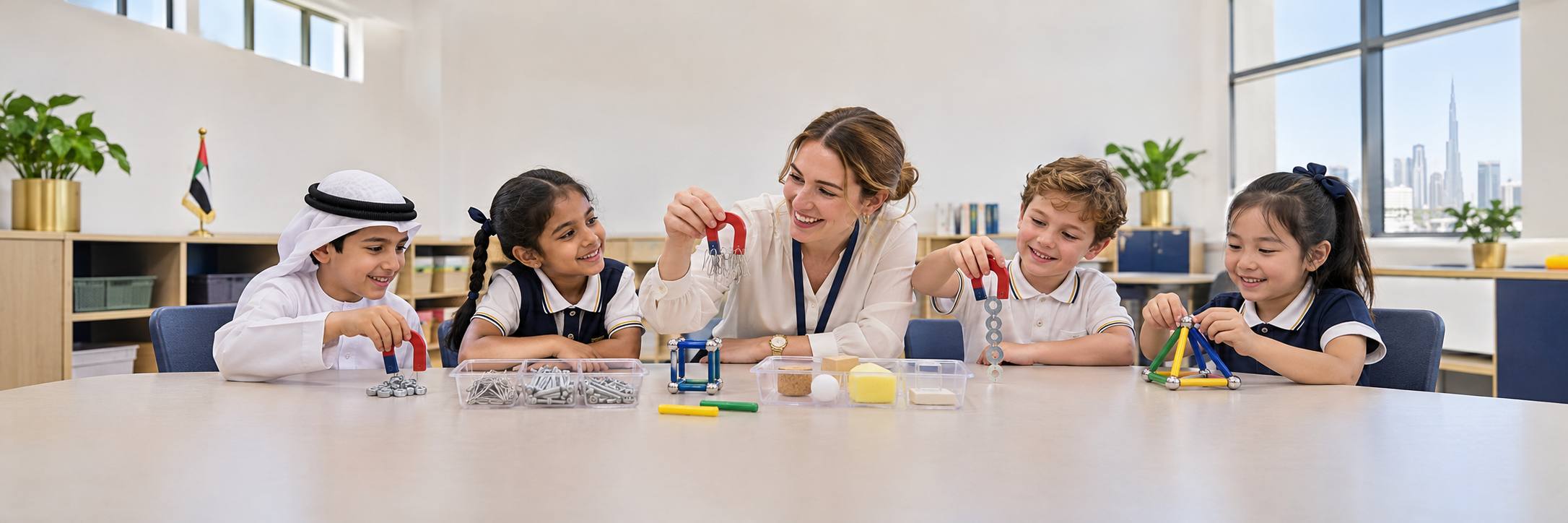
A magnet investigation illustrates this distinction. Pupils might sort objects according to their predictions, test each material and then reconsider their original categories. The interest comes from discovering a pattern and explaining it, rather than simply handling the equipment.
The level of guidance should reflect the year group and pupils’ prior learning. Younger children may need shorter stages and carefully modelled language, while older pupils can work with greater independence and more demanding constraints.
Plan for participation as well as delivery
The organisation of a session shapes how pupils experience it. Group sizes, access to materials and the balance between demonstration and exploration all deserve attention during planning. A busy room does not necessarily mean that every pupil has had a meaningful role.
Schools and facilitators should discuss relevant learning needs, communication support and practical adaptations early. Clear instructions, appropriate resources and considered group roles can create more opportunities for pupils to contribute.
Staff supervision, safety arrangements and responsibilities should also be agreed before the visit, in line with the school’s requirements.
Make the workshop fit the school day
A clear timetable allows the experience to sit comfortably within normal school routines. Planning should account for setup, session length, transitions between classes and clearing away, alongside the number of pupils taking part.
The space should suit the activity. Classroom investigations, larger construction challenges and school-wide events have different requirements for furniture, movement and equipment. Confirming these details, including any need for water or power, helps avoid last minute adjustments.
The brief should also establish which facilitators, materials and equipment are included, and what the school needs to provide.
Connect the experience to subsequent learning
The end of the session should create a useful point of return. A short reflection, a recorded observation or an explanation of a design decision gives teachers something concrete to revisit in class.
Follow-up activities can extend this connection beyond the school day. BrightStart Learning’s take home activity goodie bags include activities linked to the session, giving pupils an opportunity to revisit ideas and continue exploring at home. Their purpose is to extend the learning experience through a relevant activity.
A considered approach to school enrichment
A successful workshop brings together a clear educational purpose, engaging practical work and realistic planning. These elements help schools select an experience for its relevance to pupils’ learning as well as its immediate appeal.
BrightStart Learning plans curriculum-linked workshops, in-school experiences, school events, and challenges and competitions with schools across the UAE. Explore our school workshops and experiences, or contact hello@brightstartlearninguae.com with your topic, year group and preferred dates.

